

A design portfolio is more than a collection of attractive images. It is often the first opportunity a potential client, recruiter, or creative team has to understand how you think, what you can create, and what kind of work you want to do. A strong portfolio should therefore communicate both visual ability and professional direction.
Dribbble is a creative platform where designers can showcase their work, discover inspiration, connect with other creatives, offer services, and find professional opportunities. The platform currently features work across areas such as UI/UX, web design, branding, product design, illustration, animation, and more. It also provides project briefs and a jobs section for designers looking for opportunities.
Building a useful portfolio does not mean uploading everything you have ever designed. A more thoughtful approach is to select relevant work, present it clearly, explain your contribution, and make it easy for the right people to understand what you can offer.
Define the Type of Designer You Want to Be
Before choosing which projects to showcase, think about the type of work you want to attract. A portfolio that tries to represent every possible design skill can sometimes make your professional identity unclear.
Dribbble supports designers across areas including graphic design, web design, mobile design, product design, branding, UX/UI, illustration, and 3D design. This variety means you can find an audience for different creative specialties, but your own profile should still have a recognizable direction.
If you want to work on mobile interfaces, for example, prioritise interface projects rather than filling your profile with unrelated posters. If branding is your main interest, show logos, visual identities, typography, and applications of the brand system.
This does not mean you can never experiment. Personal projects can demonstrate range and creativity. The important thing is to make your strongest professional direction easy to recognise.
A clear focus can also help you identify what projects are missing from your portfolio. Instead of creating random work, you can deliberately build projects that demonstrate the skills you want potential clients or employers to notice.
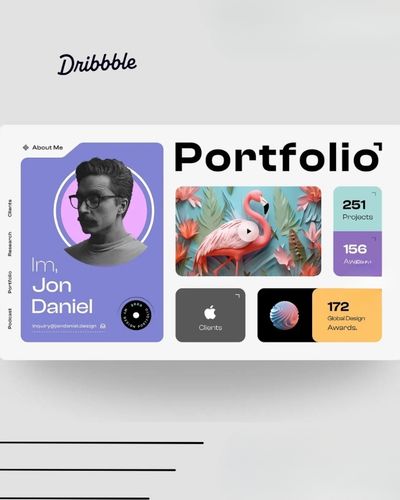
Select Projects That Show Your Best Thinking
A portfolio should be selective. Ten carefully chosen projects can communicate more than dozens of pieces that vary significantly in quality.
Dribbble allows designers to share individual pieces of work, commonly presented as “shots,” making visual presentation an important part of how projects are discovered. The platform currently features work ranging from dashboard interfaces and mobile apps to logos, landing pages, illustrations, and brand identities.
Start by reviewing your existing work and divide it into three groups: strong, average, and outdated. Focus primarily on the strongest projects. Remove pieces that no longer represent your current ability.
Look for variety within your chosen work without sacrificing consistency. A UI designer might show a dashboard, mobile application, ecommerce experience, and landing page. A branding designer could show identities from different industries while maintaining a consistent level of quality.
Your portfolio should make someone want to see more, not force them to search through everything you have created.
Present the Story Behind Each Project
Visuals attract attention, but context can help people understand your design ability. A finished interface or logo may look impressive, yet a potential client also wants to know what problem the work was solving.
Whenever appropriate, explain the objective, your role, the audience, and the main design decisions. If you worked as part of a team, make it clear which parts you personally contributed.
This is especially useful when presenting conceptual projects. Explain what inspired the direction and what you were trying to achieve. For real client projects, describe the challenge without revealing confidential information.
A strong presentation can also show multiple stages of the work. You might include early concepts, typography choices, colour exploration, wireframes, interface components, or final applications.
The goal is not to write a long case study for every project. Instead, give viewers enough information to understand the thinking behind the visuals.
When someone sees both the result and the reasoning, your work becomes more than an attractive picture. It becomes evidence of your design process.
Make Your Profile Work Like a Professional Introduction
Your individual projects matter, but your profile brings them together. Treat it like a professional introduction rather than simply a username attached to a gallery.
Dribbble encourages designers to build their personal brand through profiles and shared work, while its professional features are designed to help creatives attract clients, recruiters, and other opportunities.
Use a clear profile image and a concise description of what you do. Mention your main design speciality and, where useful, the types of projects you are interested in.
Your profile should answer a few simple questions quickly: Who are you? What do you design? What kind of work are you looking for?
Keep the language straightforward. You do not need a long list of impressive-sounding terms if they do not communicate anything specific.
It is also worth reviewing your profile occasionally. As your skills and interests develop, older descriptions may no longer represent your professional direction. Updating your profile keeps your public presence aligned with the kind of opportunities you want to attract.
Use the Platform to Discover Opportunities
A portfolio becomes much more useful when it connects your work with professional opportunities. Dribbble currently provides designers with several ways to explore this side of the platform, including project briefs, freelance services, talent discovery, and a dedicated jobs board.
The jobs section currently includes opportunities such as graphic designer, UI/visual designer, UI/UX designer, digital brand designer, and product designer roles, including remote positions.
Rather than applying to everything, look for opportunities that genuinely match your skills. Pay attention to the type of portfolio being requested, the experience level, and the responsibilities involved.
Freelancers can also use project briefs to identify potential client work. Dribbble currently allows designers to browse briefs, send proposals, offer services, and accept payments through the platform.
This makes it useful to think about your portfolio while considering the work you want to win. If you want branding clients, your profile should make branding capability obvious. If you want UI/UX projects, your strongest interface work should be easy to find.

Keep Improving Instead of Treating the Portfolio as Finished
A portfolio should evolve with your career. New skills, better projects, changing interests, and professional experience can all change what deserves to be featured.
Dribbble provides designers with resources such as design fundamentals, freelance design resources, community content, interviews, and opportunities to explore other designers’ work. These resources can provide inspiration while helping you stay aware of different approaches within the design community.
However, inspiration should lead to experimentation rather than imitation. When you discover an interesting interface, illustration style, animation technique, or branding approach, ask yourself what you can learn from it and how you could develop your own interpretation.
Set aside time every few weeks or months to review your portfolio. Remove weaker work, improve project presentations, update your profile, and add new pieces when they genuinely strengthen your professional story.
You can also use feedback from peers or other designers to identify weaknesses you may not notice yourself. Sometimes a project needs better presentation rather than a complete redesign. In other cases, the portfolio may simply need a clearer focus.
The strongest portfolio is not necessarily the one with the most projects. It is the one that communicates ability, personality, process, and professional direction clearly.
By choosing a specific design focus, selecting strong projects, explaining the thinking behind your work, maintaining a professional profile, and actively exploring relevant opportunities, you can turn a collection of designs into a much stronger career asset.
Dribbble provides a space where designers can showcase their work, discover other creatives, connect with potential clients, and explore job opportunities. The real value comes from using those features intentionally.
Your portfolio should not simply prove that you can design. It should help the right people understand why they should work with you.