

For many travellers, getting to a holiday destination is simply something to get through before the real trip begins. But travelling by ferry offers a different possibility. Instead of rushing through an airport or spending an entire journey behind the wheel, you can slow down, enjoy the changing scenery, have a meal, and arrive feeling as though your holiday has already started.
Brittany Ferries connects the UK with destinations in France and northern Spain through a network of routes from Portsmouth, Plymouth and Poole. Depending on the route, travellers can reach destinations including Caen, Cherbourg, St Malo, Roscoff, Santander and Bilbao. The company also offers holiday packages and travel options for foot passengers as well as those taking their cars.
The key to enjoying this type of journey is planning it as part of the holiday rather than treating it as simple transportation. Choosing the right route, deciding whether to take your car, selecting accommodation onboard and using the sailing time well can make the entire experience more relaxed.
Choose a Route That Works With Your Holiday Plans
The best ferry route is not necessarily the shortest one. It is the route that places you in the most convenient position for the rest of your holiday.
Brittany Ferries currently offers routes from three main UK departure ports to France, while Spain can be reached directly from Portsmouth and Plymouth. French destinations include Normandy and Brittany, while Santander and Bilbao provide gateways into northern Spain.
Think about where you want to go after leaving the port. If your plans centre on Normandy, a route arriving in northern France can reduce unnecessary driving. Travellers heading towards Brittany may prefer a sailing that brings them closer to the region. For a Spanish road trip, choosing between Santander and Bilbao can influence the first part of your itinerary.
The departure port matters too. Portsmouth is particularly useful for travellers from London and the South East, while Plymouth can be convenient for people travelling from the South West, Wales or the Midlands. Poole can also provide a practical departure point for travellers from southern England.
Look at the entire journey rather than only the time spent on the water. A slightly longer sailing can sometimes result in a much easier overall trip.

Decide Whether Taking Your Car Makes Sense
One of the biggest advantages of travelling by ferry is the ability to take your own car. This can make a major difference when your holiday involves several destinations, rural areas, beaches, countryside or places where public transport is less convenient.
Brittany Ferries offers car travel on its routes to France and Spain, allowing travellers to continue their road journey after leaving the ship. The company’s route network is designed to bring passengers closer to their final destinations, potentially reducing the amount of driving required once they reach continental Europe.
Before deciding to take your car, think about the style of holiday you are planning. A road trip through several towns may benefit enormously from having your own vehicle. You can carry more luggage, stop when you want, and avoid arranging multiple transfers.
On the other hand, a short city break may not require a car at all. Brittany Ferries also promotes foot-passenger travel and its Rail & Sail option, which combines train and ferry travel for journeys to France.
Consider parking, fuel, driving distances and where you will stay once you arrive. The right choice depends on the complete itinerary rather than the ferry crossing alone.
Make Your Cabin Part of the Experience
Overnight travel can be tiring if you spend the entire crossing trying to stay comfortable in a public seating area. For longer journeys, a private cabin can turn the crossing into a more relaxing part of the holiday.
Brittany Ferries describes its ships as cruise ferries, with cabin accommodation available on relevant routes. Depending on the ship and sailing, onboard facilities can include restaurants, lounges, entertainment areas and other spaces designed to make the journey feel more like a cruise than a simple transfer.
A cabin can be particularly useful for families, couples and travellers taking overnight sailings. Instead of arriving at your destination exhausted, you can sleep during the crossing and begin exploring after arrival.
When choosing accommodation, consider how long you will be onboard and what matters most to you. If you mainly want somewhere quiet to sleep, a basic cabin may be sufficient. If the crossing itself is part of your holiday, you may want to consider the available cabin categories and facilities more carefully.
Planning your sailing around sleep can also make the rest of your itinerary easier. An overnight departure can effectively turn travel time into part of your accommodation, leaving more daylight available after arrival.
Use the Sailing Time to Slow Down
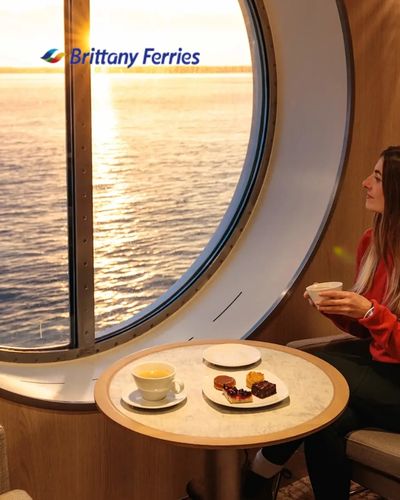
One of the most appealing aspects of ferry travel is that you are no longer responsible for driving while the ship is moving. Instead of watching the road, you can look out across the sea, enjoy a meal, read, talk with your travel companions or simply take a break.
Brittany Ferries highlights onboard dining, lounges, sundecks, entertainment and other facilities across its cruise-ferry experience. The exact facilities vary by ship and route, so checking the details of your sailing before departure is worthwhile.
Think about what you normally wish you had more time for during a busy holiday. Perhaps you want to read a book, organise photographs, plan the next few days, or simply sit somewhere comfortable without needing to navigate traffic.
Families can also benefit from having a journey where children can move around rather than remaining in a car for hours. Travellers can enjoy meals without searching for a roadside stop, while couples may appreciate having uninterrupted time together.
The sailing does not need to be packed with activities. Sometimes the best use of travel time is simply doing less.
Plan Your Arrival Around the Destination
Arriving at a port is not the end of the journey. It is the beginning of the next part, so think ahead about what you want to do once you disembark.
Brittany Ferries‘ destination network provides access to regions including Normandy, Brittany, the Basque Country, Cantabria and Nouvelle-Aquitaine. The company also highlights the road connections available from its ports, making route selection useful for travellers continuing by car.
Avoid creating an itinerary that requires an exhausting drive immediately after an overnight crossing. If possible, choose accommodation relatively close to the arrival port for your first night, especially when travelling with children or after a long sailing.
Alternatively, if the arrival time works well, you can continue directly towards your first destination. This can be particularly useful when the port provides convenient road access to the places you want to visit.
Check the estimated driving time before booking accommodation. A map can make two destinations look close together while actual roads, traffic and stops make the journey considerably longer.
A little flexibility on the first day can make the entire holiday feel less rushed.
Treat the Ferry as the First Holiday Experience
The biggest change in mindset is to stop thinking of the ferry as a gap between home and the destination. It can be the first experience of the trip.
Brittany Ferries currently promotes holidays to France and Spain alongside its ferry services, including short breaks, seasonal trips and package holidays. Its onboard experience is designed to make the journey itself part of the travel experience.
This approach changes how you plan. Instead of asking only how quickly you can reach France or Spain, ask what kind of journey would make the holiday more enjoyable. Would an overnight sailing help you save time? Would taking your car give you more freedom? Would a cabin make the crossing more comfortable? Would a different arrival port reduce your driving?
These questions can lead to a much better travel plan.
A well-chosen ferry route can combine transportation, relaxation and the beginning of your holiday in one experience. Whether you are heading to the beaches of Brittany, exploring Normandy, discovering the Basque Country or planning a longer road trip through Spain, the journey does not have to be something you simply endure.
With thoughtful route selection, suitable accommodation, sensible planning and a willingness to enjoy the time onboard, travelling by sea can become one of the memorable parts of the holiday itself.